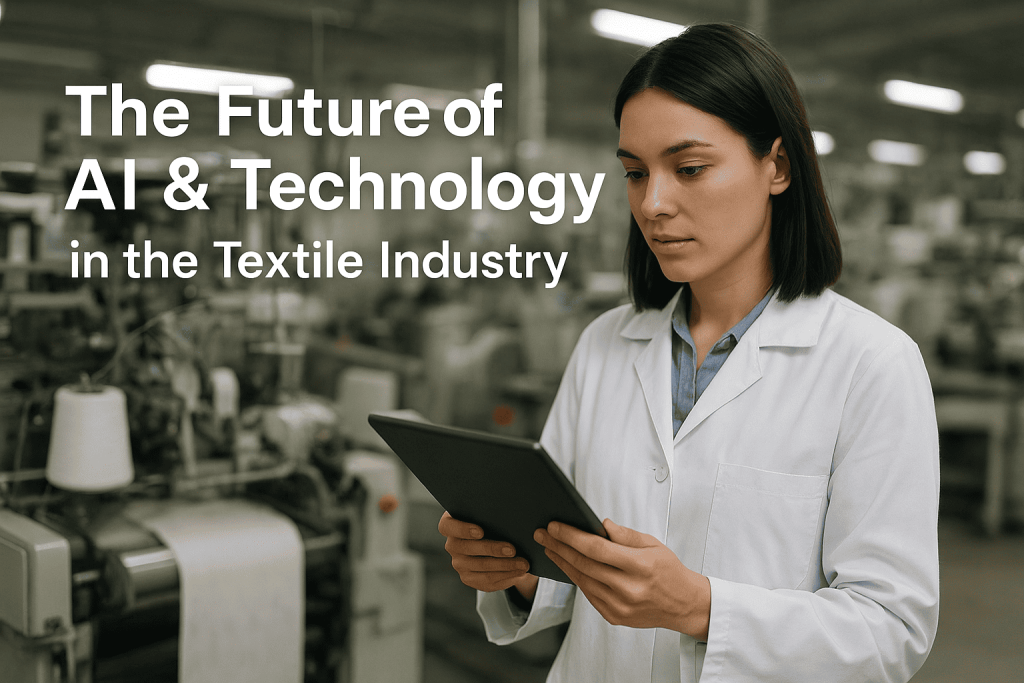
Introduction
The textile industry is undergoing a powerful transformation as Artificial Intelligence (AI), automation, and Industry 4.0 technologies revolutionize every stage of production—from fiber development to final quality inspection. What was once a labor-intensive sector is now becoming a smart, data-driven, and technology-enhanced ecosystem.
Today’s modern textile businesses are exploring machine learning, robotics, smart sensors, and digital twins to improve efficiency, sustainability, and profitability. This evolution is not just changing the factory floor—it’s shaping the future of fashion, e-commerce, and supply chain management worldwide.
🧠 How AI Is Transforming Textile Manufacturing
AI-powered machines can analyze real-time production data, reduce errors, and improve fabric quality. Predictive analytics ensures that machines operate at peak performance, leading to lower downtime and reduced waste.
Key AI Applications in Textile Production
Automated fabric quality control using computer vision to detect defects instantly
Predictive maintenance to prevent machine breakdowns
Robotic automation for cutting, spinning, packing, and dyeing processes
AI-driven production planning for faster order fulfillment
Smart resource management that reduces water, chemicals & energy usage
Example Scenario:A weaving factory uses AI cameras to scan fabric at high speed, instantly identifying flaws such as broken yarns or color mismatches that human eyes might miss.
📌 Result: Saves time, reduces waste, and improves consistency.
🌐 AI in Textile Product Design & Innovation
AI tools enable designers to create patterns, textures, and garment styles in minutes instead of months. Virtual sampling and 3D modeling reduce physical sample production costs and improve sustainability.
Benefits of AI in design
Generate endless design variations instantly
Predict market trends using data analytics
Create personalized, custom-fit clothing with body-scan measurements
Reduce fabric waste by optimizing cutting layouts
🧵 Smart Textiles and Wearable Technology
The future of textile production includes intelligent fabrics embedded with sensors, conductive fibers, and microelectronics.These next-generation textiles are used in:
Healthcare monitoring clothing
Sports performance wear
Military and defense protective gear
Climate-adaptive fabrics
Fire-resistant and anti-bacterial materials
📌 Smart fabrics are expected to grow into a $13B+ market within the next decade.
🌍 AI in Sustainable Textile Manufacturing
Environmental impact is one of the textile industry’s biggest challenges. AI is enabling sustainable production through:
Efficient chemical and dyeing control systems
Recycling identification of fiber types for reuse
Carbon footprint tracking across the supply chain
Waste minimization through production simulation
🚀 The Future Ahead
By 2035, smart factories powered by AI, robotics, and IoT will dominate global textile manufacturing. Businesses that adopt digital technology now will lead the market with stronger quality, faster speed, and higher innovation.
What Textile Companies Must Focus On
✔ Invest in automation & digital training✔ Build AI-enabled supply chains✔ Use data to drive decision-making✔ Adapt sustainable manufacturing models✔ Collaborate with technology partners
✨ Conclusion
The textile industry is moving toward a revolution where creativity, technology, and sustainability work together. AI is not replacing humans—it is empowering them to innovate more intelligently and efficiently.
The future of textiles is smart, connected, and limitless.
👤 Author
Mr.Iyandurai — Textile enthusiast, innovator, and storyteller exploring the intersection of fabric science, technology, and design evolution. Dedicated to sharing knowledge and inspiring growth.— Always Love with Iyandurai